
The Clockwork of Genius
Meet the Minds Behind the Mystery
The Resonance Archive
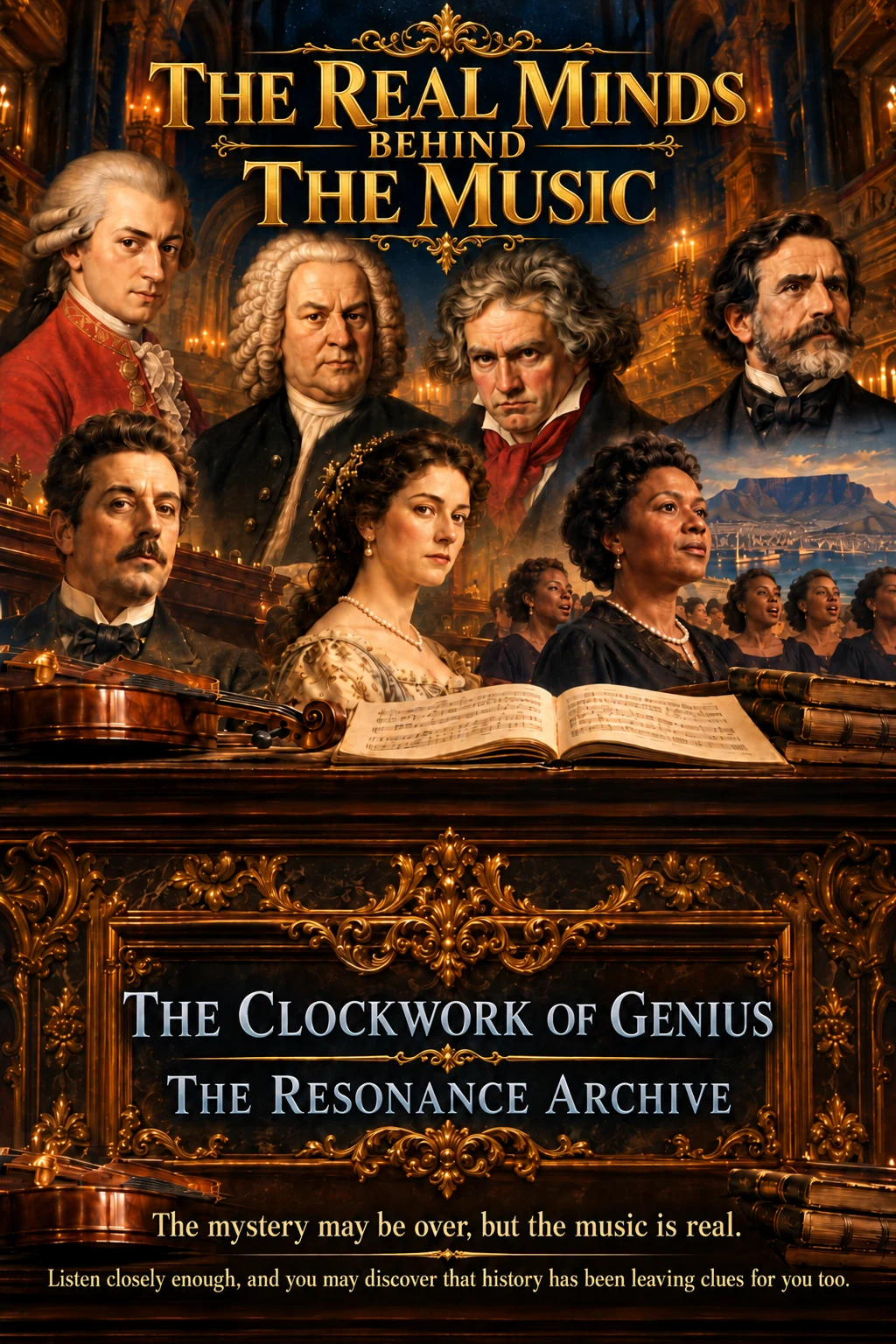
The Real Minds Behind the Music
Across history, extraordinary musicians have discovered that music is more than melody. It is pattern and balance, voices moving independently and together, vibration transformed into feeling, and stories carried through sound.
Mozart, Bach, Beethoven, Verdi, Puccini, Francesca Caccini, and May Abrahamse and the Eoan Group each reveal a different kind of brilliance—and show that great art is shaped not only by talent, but by practice, collaboration, persistence, and the courage to create.
As Lucy and Roland Mercer follow the musical trail in this book, their fictional adventure leads through real music, real places, and real history. They discover that genius rarely belongs to one person standing alone: composers depend on performers, ideas develop through disagreement, and voices that history tried to silence can still endure. The mystery may be over, but the music is real. Listen closely enough, and you may discover that history has been leaving clues for you too.
Wolfgang Amadeus Mozart (1756–1791)
Mozart was famous for composing with remarkable speed and imagination. His music often feels effortless, but beneath it are carefully built patterns, balance, humor, and unexpected turns. In the story, those qualities become part of the Mercer children’s trail, where musical patterns and surprises can reveal more than they first appear to.
Johann Sebastian Bach (1685–1750)
Bach was a master of counterpoint, a way of combining independent musical lines so that each one keeps its own identity while contributing to a larger whole. His music becomes an important example of how different voices can work together without any one of them needing to disappear.
Ludwig van Beethoven (1770–1827)
Beethoven pushed music in bold new directions and continued composing even as his hearing declined. His life is a powerful example of adapting when circumstances change and finding new ways to create. His music also reminds us that limitations do not have to erase imagination, determination, or an individual voice.
Giuseppe Verdi (1813–1901)
Verdi brought unforgettable characters and stories to life through opera. His choruses are especially powerful, showing what can happen when many separate voices come together around a shared purpose. In the story, his music helps explore the difference between people choosing to act together and being forced to move as one.
Giacomo Puccini (1858–1924)
Puccini created operas filled with emotion, memorable characters, and soaring melodies. His work shows how music can tell a story even before a single word is understood. Opera also depends on collaboration, bringing together singers, musicians, conductors, designers, technicians, and many others to create one experience for an audience.
Francesca Caccini (c. 1587–1641)
Francesca Caccini was a gifted singer and composer who worked at the Medici court in Florence and became an important figure in the early history of opera. Her achievements did not always receive the same attention as those of many male composers from her era. Her story gives Lucy and Roland another reminder that important voices can be overlooked, even when their work has helped shape history.
May Abrahamse and the Eoan Group
May Abrahamse (1905–1974) was a South African singer, teacher, and choral conductor who helped found the Eoan Group. The group built a remarkable artistic community despite racial discrimination, forced displacement, and the restrictions of apartheid. Their story, which becomes important during the Cape Town part of the adventure, shows how music can preserve community and identity even when outside forces try to silence them.
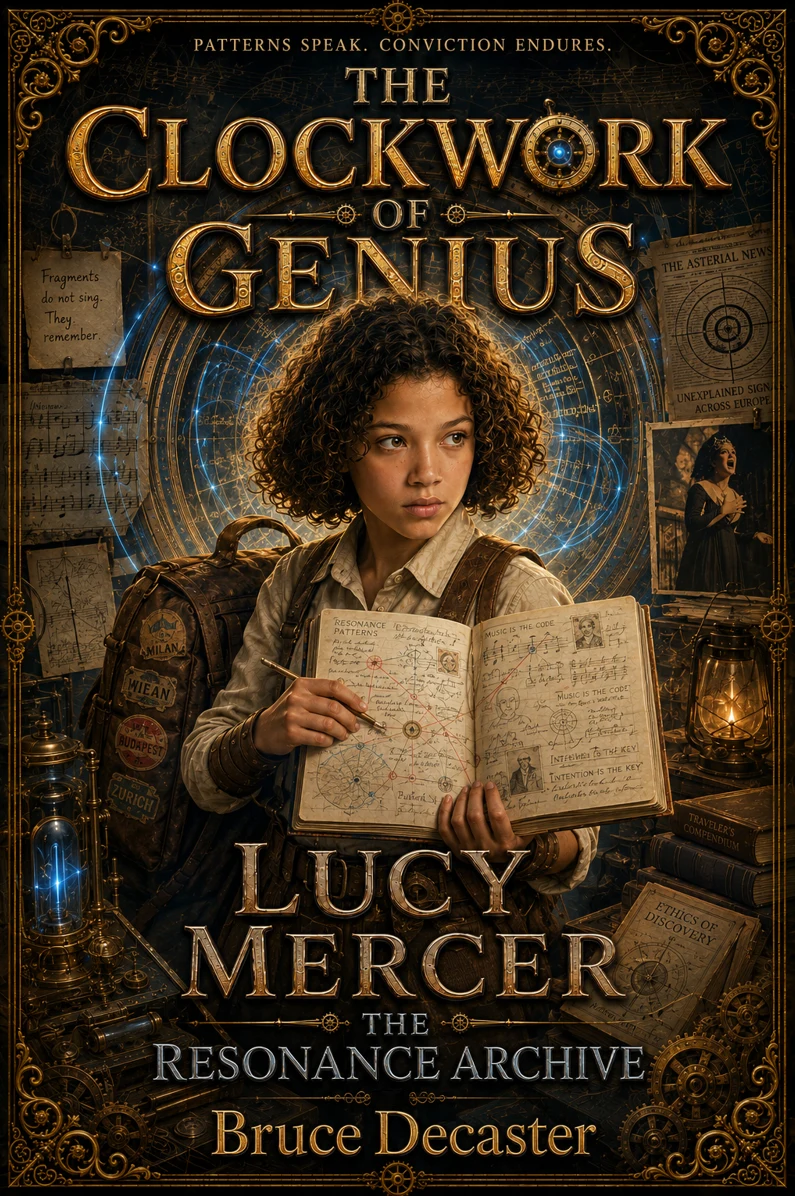
Lucy Mercer: The Mind That Connects the Pieces
At twelve, Lucy Mercer is older, steadier, and just as determined to understand the mysteries Grandpa Arthur left behind. Analytical and endlessly curious, she instinctively searches for patterns in history, people, motives, and the questions no one else thinks to ask. She still carries her notebook everywhere, not because it gives her an advantage over the musicians around her, but because observing, recording, and connecting ideas is how Lucy makes sense of the world.
That becomes especially important when the family’s newest mystery is built around music. Lucy can’t sing on pitch, and her attempts at learning piano never became a hidden talent waiting to emerge. For perhaps the first time, she finds herself surrounded by people who can hear and understand something she simply cannot. Rather than turning her into another musical prodigy, that limitation forces Lucy to recognize the value of what she brings to the group: the ability to step outside the performance and ask what everyone else may be missing.
As the mystery deepens, Lucy begins to question one of her oldest assumptions: that understanding something gives the smartest person in the room the right to decide what should happen next. Her greatest discovery may have nothing to do with musical talent at all, but with learning that knowledge, collaboration, and harmony only mean something when every voice is allowed to choose whether and how it joins in.
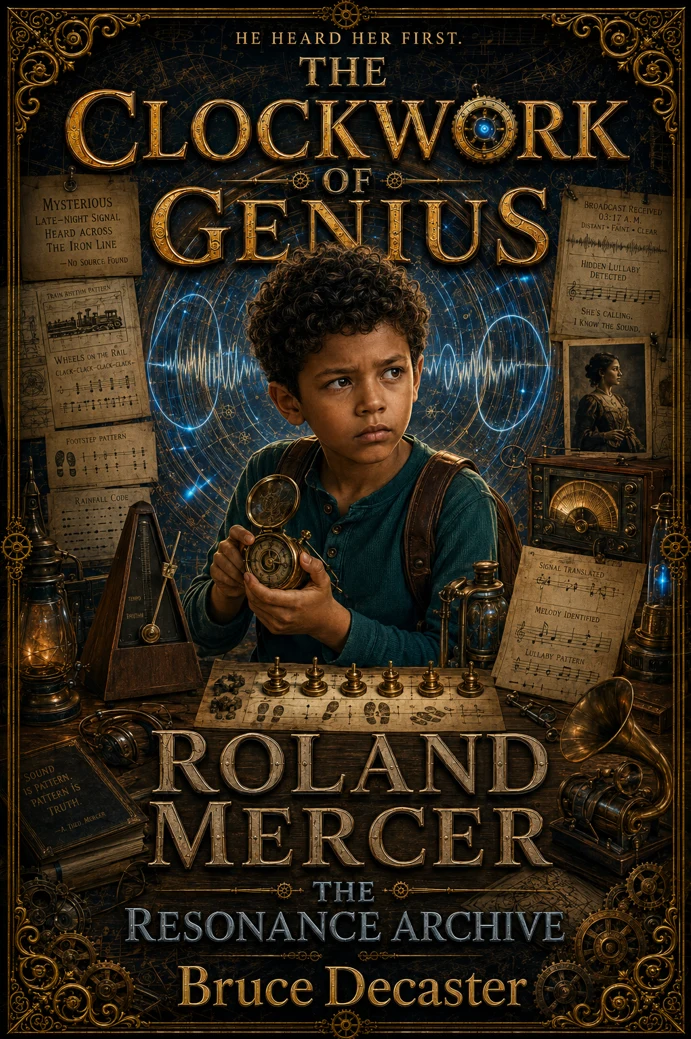
Roland Mercer: The Boy Who Hears the Pattern
Eight-year-old Roland notices things other people miss.
His memories of his mother are fragmentary, but his memory for rhythm is remarkable. He hears patterns in footsteps, rain, train wheels, speech, and, one ordinary evening, in a mysterious sound hidden beneath a radio broadcast. What he recognizes there sends the Mercer family searching for answers they never expected to find.
Literal, observant, unintentionally funny, and increasingly tired of being treated as the little kid who needs protecting, Roland wants something simple: a real job in the mystery. This time, the family may need his unusual way of listening more than ever.
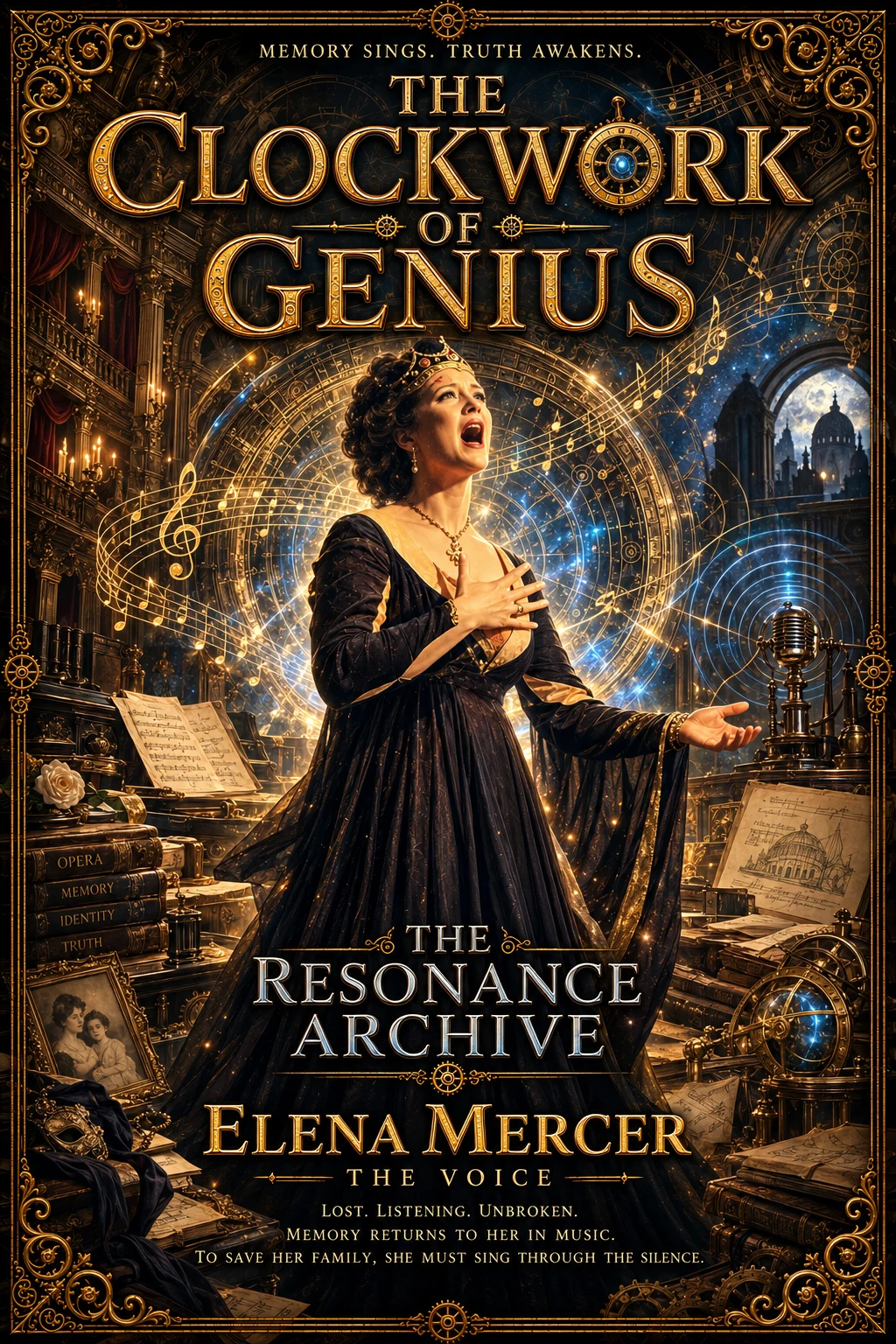
Elena Mercer “Mom”: The Voice Searching for Its Past
Elena Mercer was once a professional mezzo-soprano, a wife, a mother, and a woman everyone believed had died.
Instead, she survived with severe amnesia and spent three years creating a quiet new life without knowing the family she’d lost. Her memories haven’t returned neatly, and neither has the singing voice she once knew. Music, however, still reaches places inside her that photographs and names cannot.
Elena’s journey isn’t about becoming exactly who she used to be. It’s about discovering who she is now, what her changed voice can still do, and whether love can survive even when memory cannot provide the answers.
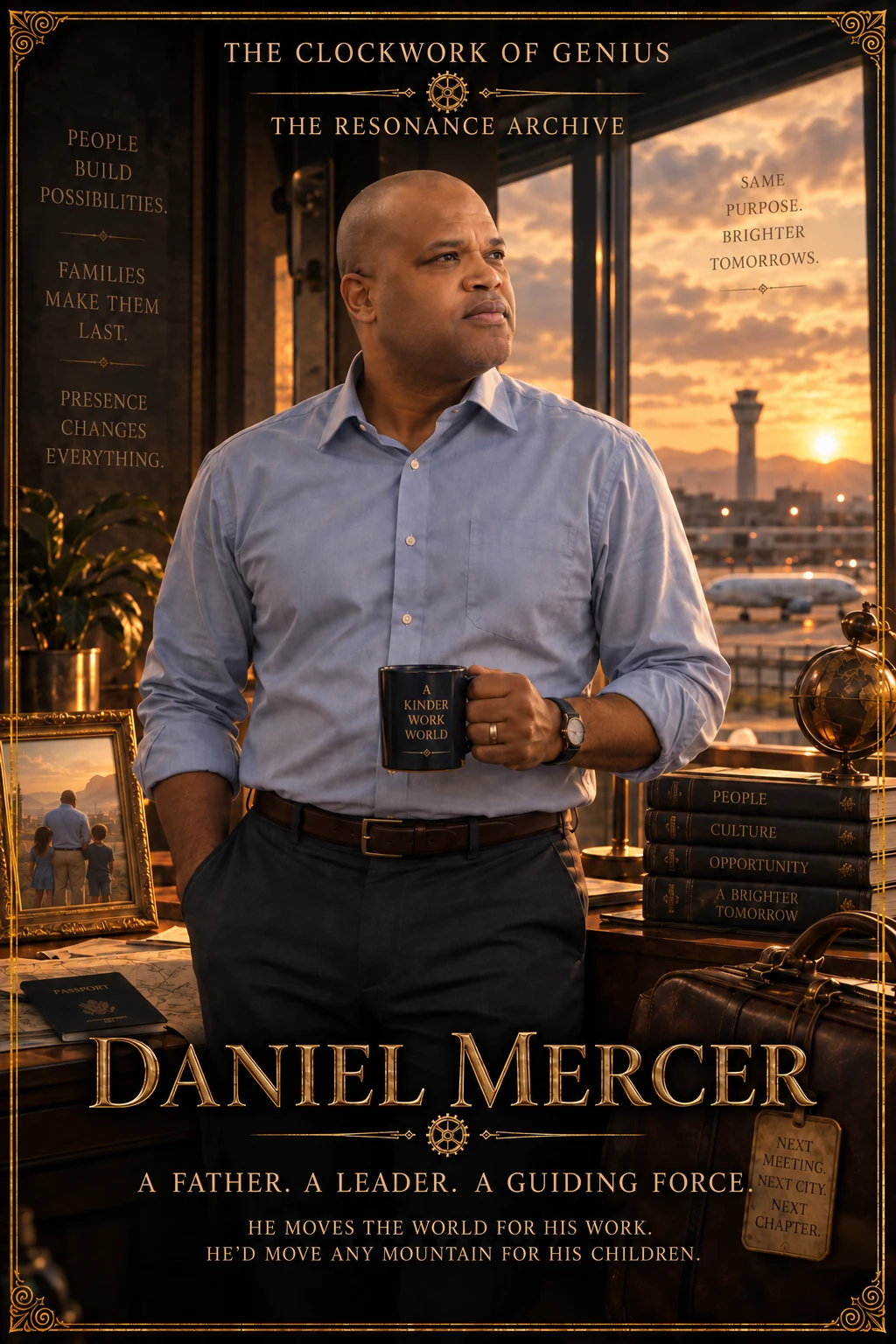
Daniel Mercer “Dad”: The Steady Heart of the Family
Daniel Mercer has already learned how painful it is to lose someone. Now he faces something almost as difficult: finding Elena alive and realizing that she doesn’t remember him.
Warm, practical, quietly funny, and still wearing the wedding ring he never took off, Daniel refuses to demand the trust Elena can’t yet give him. He has spent years providing for Lucy and Roland, but his promise after the events of Book One was different, to be truly present.
In The Resonance Archive, Daniel discovers that loving someone sometimes means giving them room to choose you again.

Adriana Vale: The Girl Between Two Families
At nineteen, Adriana Vale knows exactly what her family expects of her.
She was raised inside a world where obedience meant safety, loyalty meant silence, and Marcus Vale’s approval could easily be mistaken for love. Yet the doubts that began in Book One haven’t disappeared. They’ve grown.
Composed, watchful, and armed with a dry sense of humor that rarely arrives when people expect it, Adriana finds herself increasingly drawn toward people she was taught to distrust. Her greatest challenge may not be escaping the Vale family’s expectations, it may be deciding who she is when those expectations no longer define her.
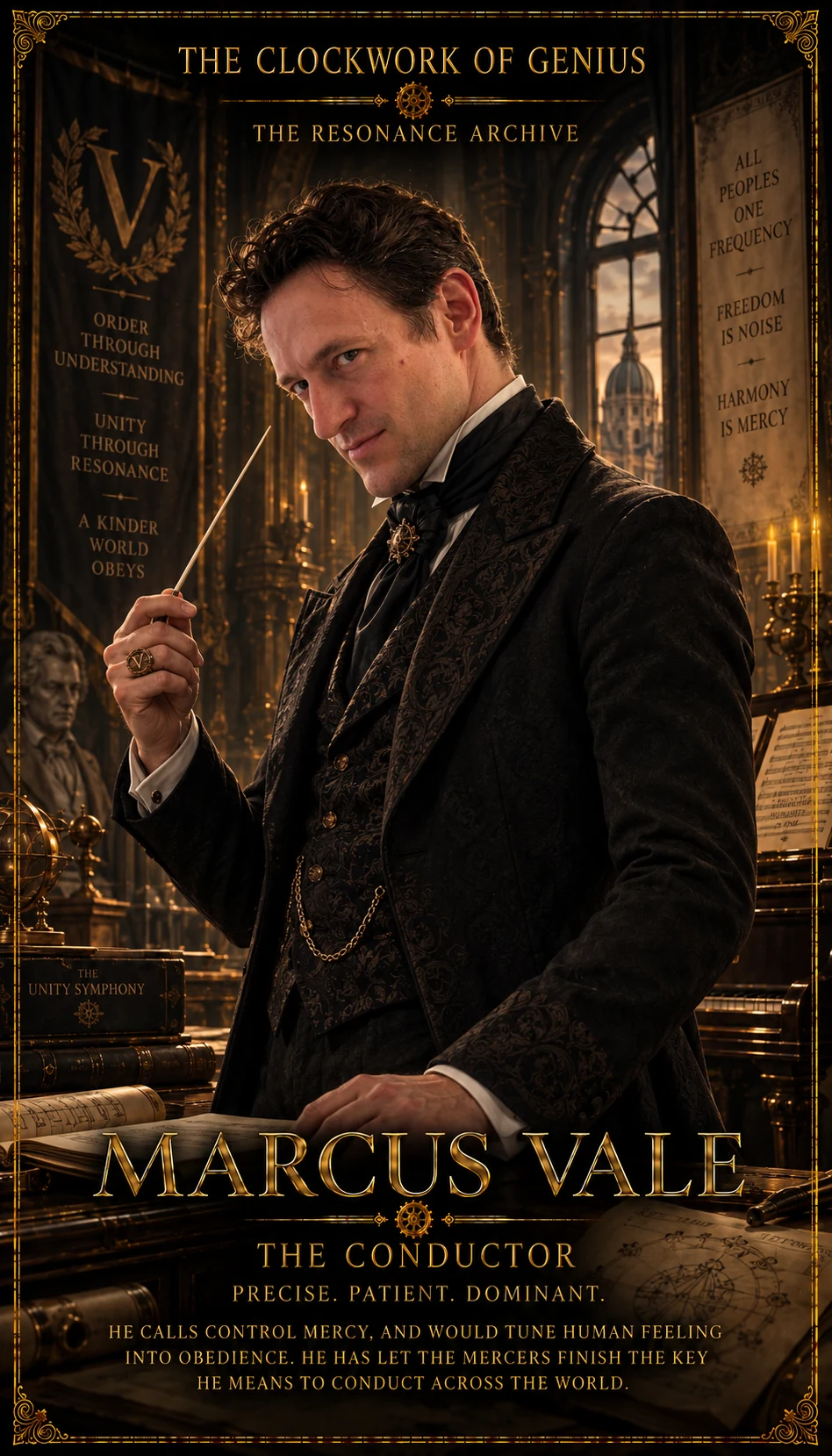
Marcus Vale: The Man Who Believes Order Is Mercy
Marcus Vale rarely needs to raise his voice.
Precise, controlled, impeccably composed, and very intelligent, he has inherited the Vale family’s pursuit of the Device, and a philosophy that makes him far more dangerous than someone motivated by simple greed.
Marcus believes humanity suffers because people cannot be trusted with their own emotions and choices. To him, the image of a conductor guiding an entire orchestra with a single hand represents something beautiful: perfect order.
Where the Mercers hear collaboration, Marcus hears control. And he is convinced that he knows what humanity needs better than humanity does.

Dr. Carol Vargas: The Protector at the Door
Dr. Carol Vargas was there when an unidentified injured woman entered her care with no reliable memory of who she was.
Over the next three years, Dr. Vargas helped that woman build a new life, and became fiercely protective of the stability she fought to create. When Daniel Mercer suddenly appears claiming to be her patient’s husband, Dr. Vargas doesn’t welcome him with open arms. She asks questions… lots of them…
Sharp, careful, compassionate, and unimpressed by urgency when a patient’s safety is at stake, Dr. Vargas may frustrate the Mercers at first. Before long, however, they start to understand that she isn’t standing in their way. She has been standing guard.

Olivia Vale: The Friend Who Stayed Behind
Olivia Vale grew up beside Adriana, knows her better than almost anyone, and understands exactly which doubts and insecurities can still reach her.
Unlike Adriana, Olivia remains loyal to the Vale family. When the distance between Adriana and Marcus becomes impossible to ignore, Olivia is sent to bring her back not simply because Marcus orders it, but because she genuinely believes she is protecting someone she loves.
That makes her far more complicated than an ordinary enemy. In a family where affection and obedience have always been tangled together, Olivia may have to decide where one ends and the other begins.
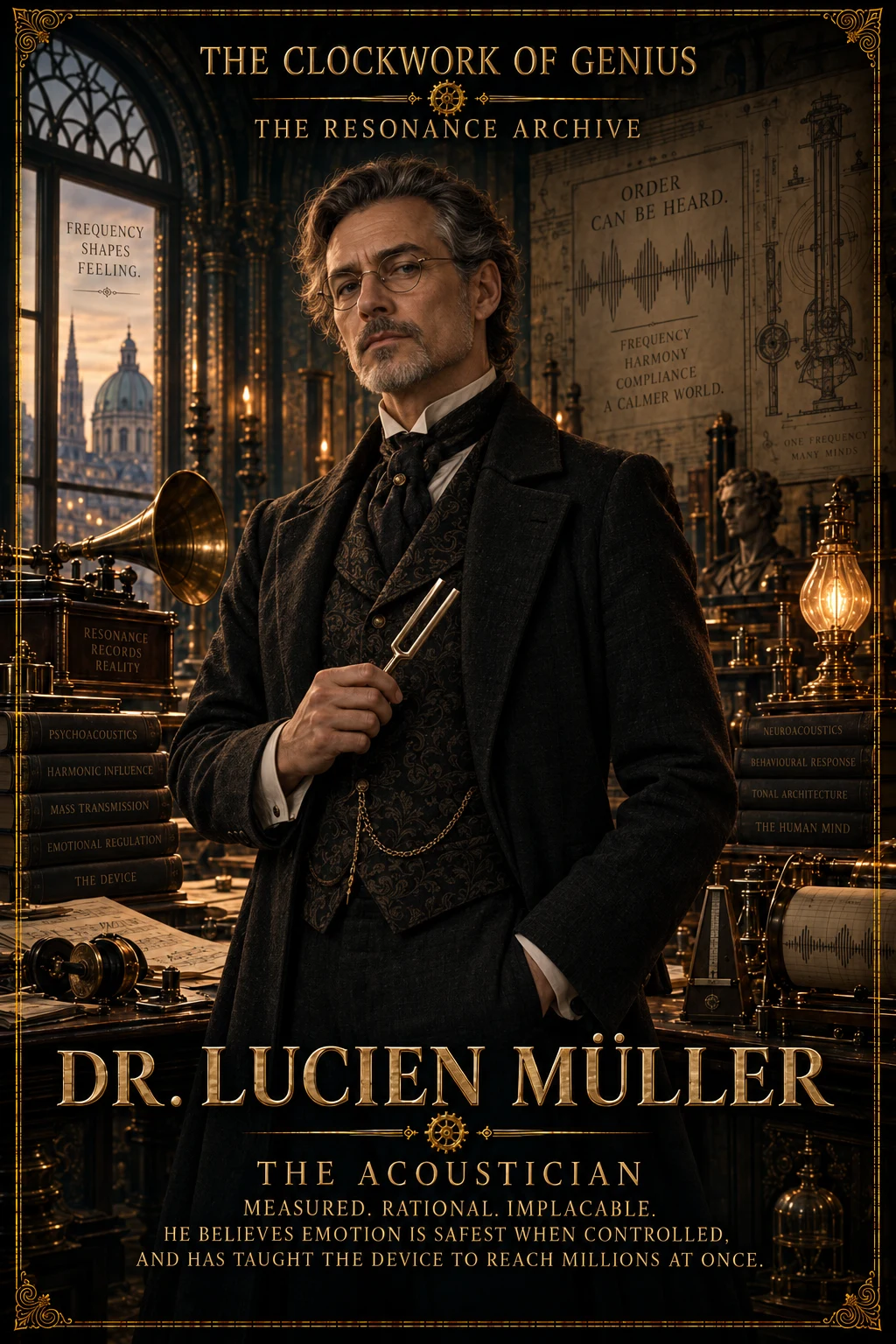
Dr. Lucien Müller: The Scientist Who Studies What Music Can Do
Dr. Lucien Müller is a specialist in psychoacoustics: the study of how sound, rhythm, and frequency affect the human mind.
Brilliant, measured, and disturbingly reasonable, Müller is fascinated by music as art and as influence. His work brings science into Marcus Vale’s plans and raises an unsettling question at the center of the story: if sound can change the way people feel, how far should anyone be allowed to push that power?
Like Marcus, Müller doesn’t think of himself as cruel. He believes emotional regulation could make humanity safer. Elena Mercer, however, sees music very differently: not as a means of controlling emotion, but as a form of expression, connection, and individual choice.
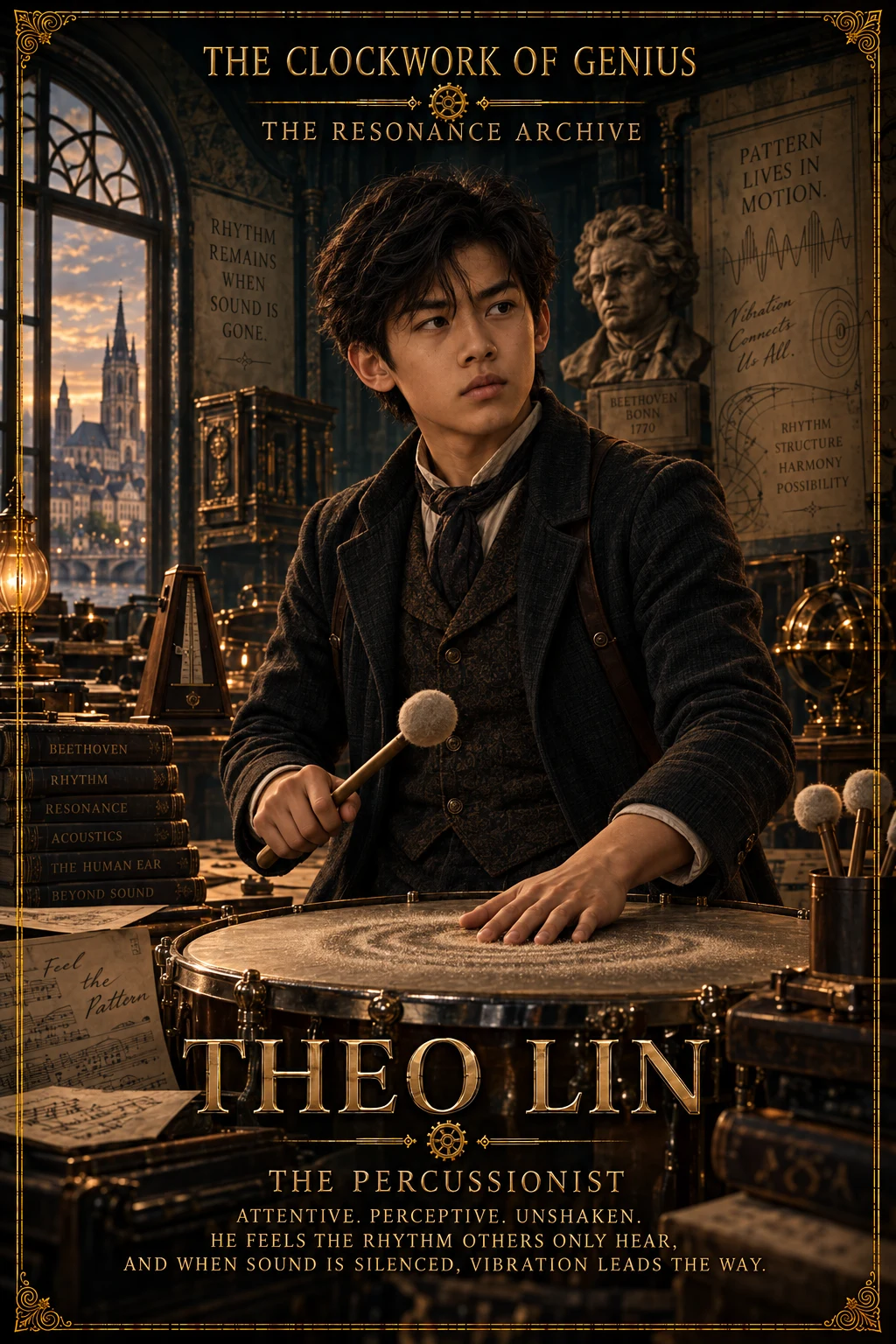
Theo Lin: The Musician Who Listens Differently
Theo Lin experiences music through rhythm, vibration, movement, and visual cues.
A deaf/hard-of-hearing percussionist introduced during the family’s journey through Beethoven’s world, Theo quickly connects with Roland. Both boys have spent enough time noticing things that other people overlook, and both understand that “hearing” music can mean far more than simply receiving sound through your ears.
Theo expands the family’s understanding of music and becomes proof that a different way of experiencing the world isn’t a missing piece. Sometimes it’s the perspective everyone else needed.
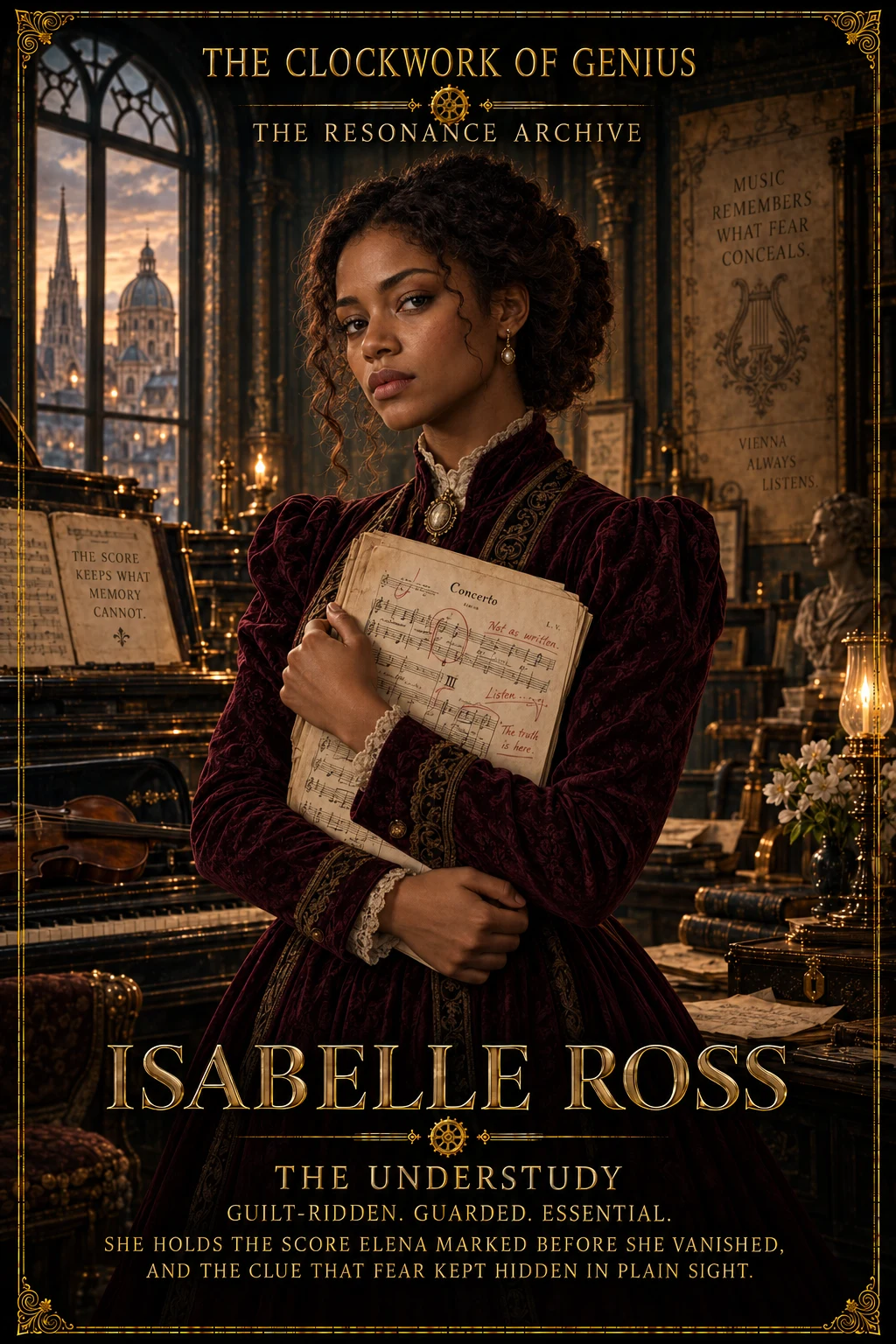
Isabelle Ross: The Singer Carrying an Old Regret
Isabelle Ross was once Elena Mercer’s understudy, trained to step into her role when needed.
Shortly before Elena disappeared, the two singers switched performance nights. Isabelle has carried the weight of that decision ever since, along with memories of an Elena who seemed frightened by something she wouldn’t explain.
Years later, Isabelle still holds something connected to Elena’s final days before the accident. The question is if fear will persuade her to keep holding onto it, or if she can finally help the family understand what Elena was trying to uncover.

Sonny, The Butler: The Man Who Helped Raise a Vale
Long before Adriana began questioning the world she was raised in, the Vale family’s longtime butler, Sonny, was one of the few people who offered her something gentler.
He watched Adriana grow up and cares for her as family, even while remaining inside the household she is increasingly pulling away from. His presence is an important reminder that a family name doesn’t tell you everything about the person carrying it.
Quiet loyalty can be dangerous in the Vale household, however, particularly when Marcus realizes exactly whom Adriana is still willing to risk something for.
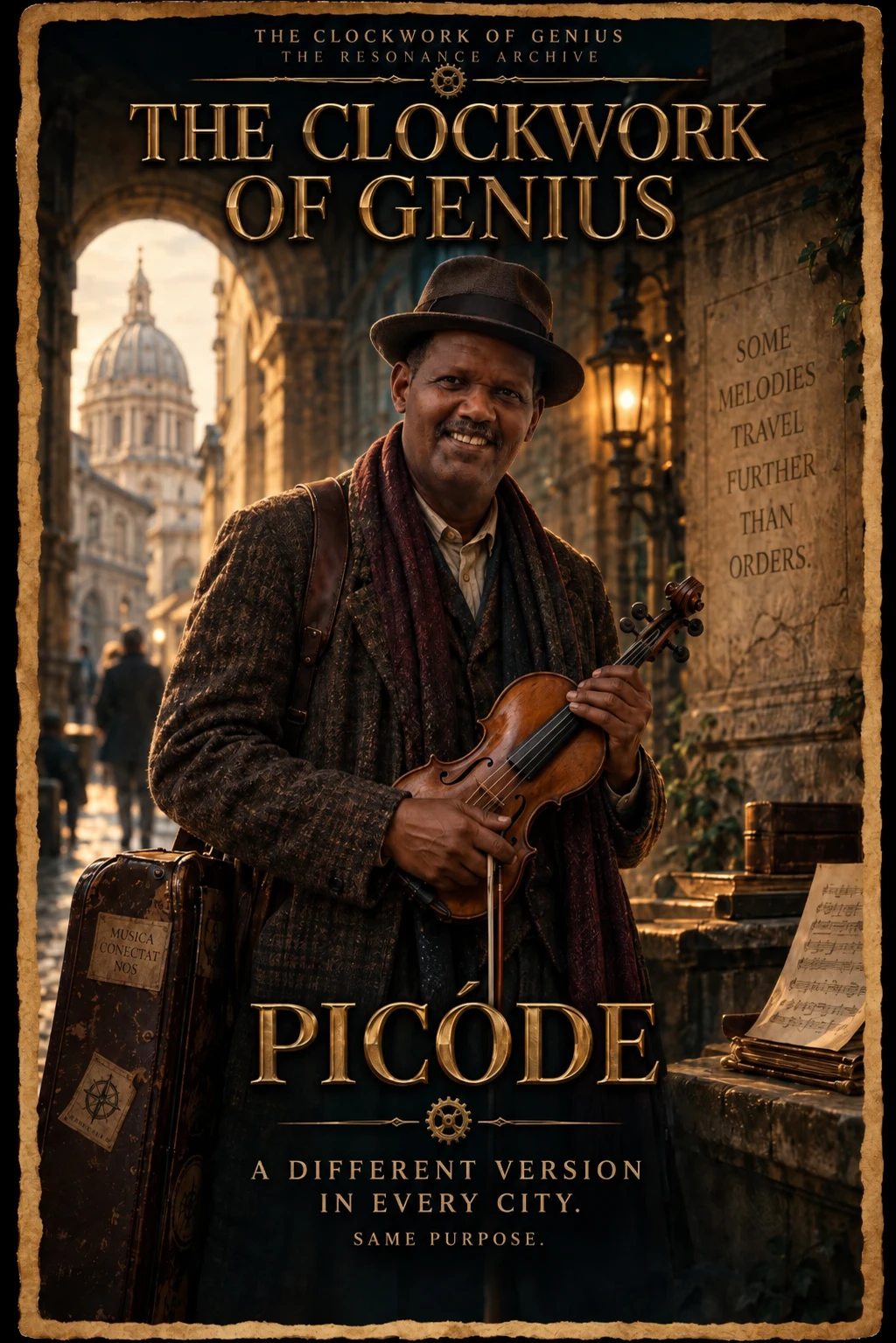
Julius “Picóde”: The Musician Who Keeps Appearing
His name is Julius, but audiences know him as Picóde.
He is a street musician with an inconvenient habit of appearing in more than one city along the Mercer family’s journey. Stranger still, the melody he plays never sounds exactly the same twice. A rhythm changes, a phrase changes, and a pause remains where Roland is certain he has heard it before.
Coincidence becomes increasingly difficult to believe.
Is Picóde following the Mercers? Is he sending them a message? Or has Marcus Vale placed someone directly in their path?
For a man who spends his life performing in public, Picóde is very good at keeping his real purpose hidden.
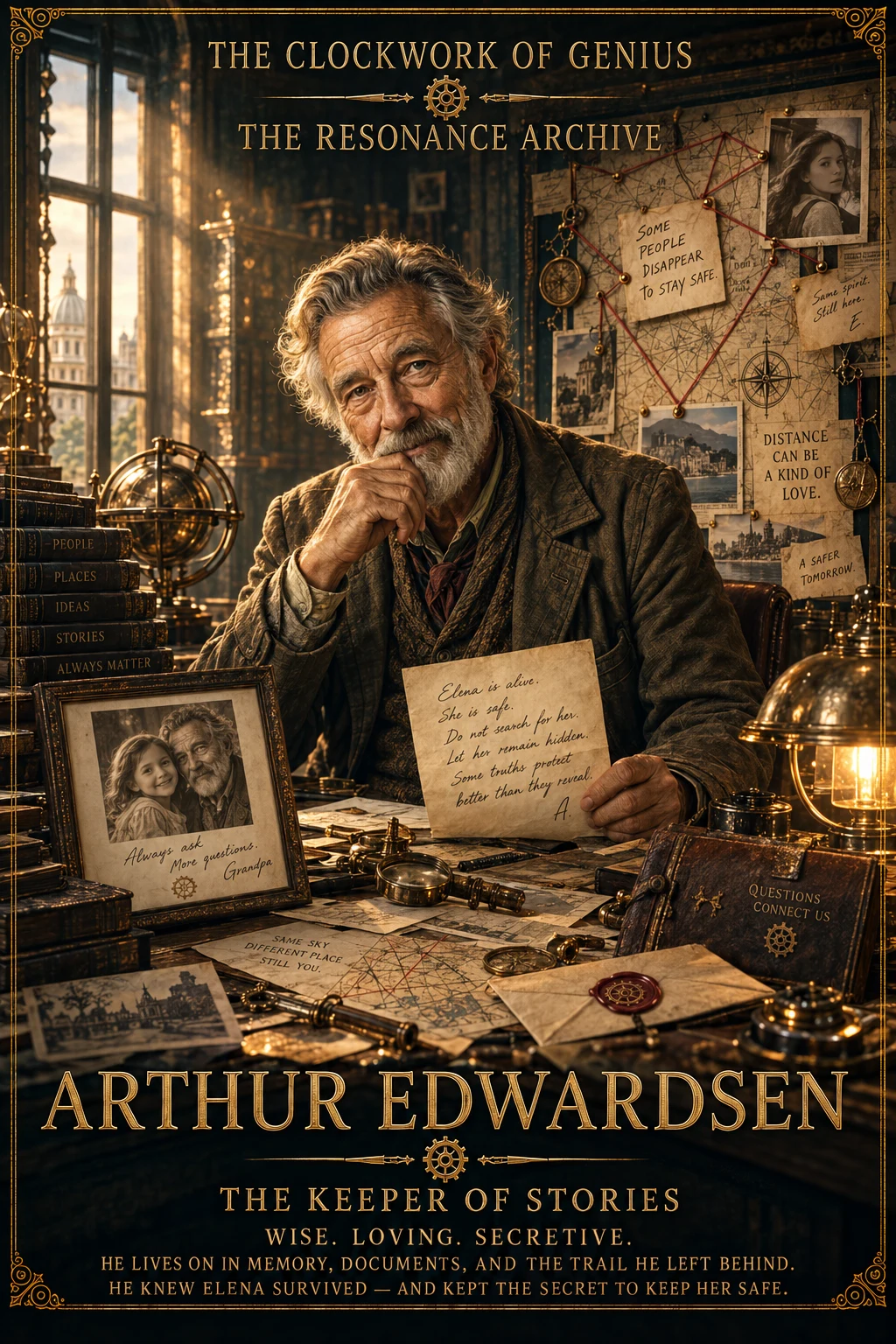
Grandpa Arthur Edwardsen: The Genius Who Left Questions Behind
Grandpa Arthur may be gone, but his presence still runs through every mystery Lucy and Roland uncover.
Elena’s father, a scholar, traveler, puzzle-maker, and guardian of dangerous knowledge, Arthur left behind journals, letters, research, and clues that continue to guide his grandchildren long after his death. Lucy has always regarded him as the person who taught her that curiosity matters.
Yet the deeper the Mercers travel into Arthur’s unfinished work, the clearer it becomes that even people we love can leave behind difficult questions.
Some mysteries reveal history.
Others change the way we remember the person who created them.
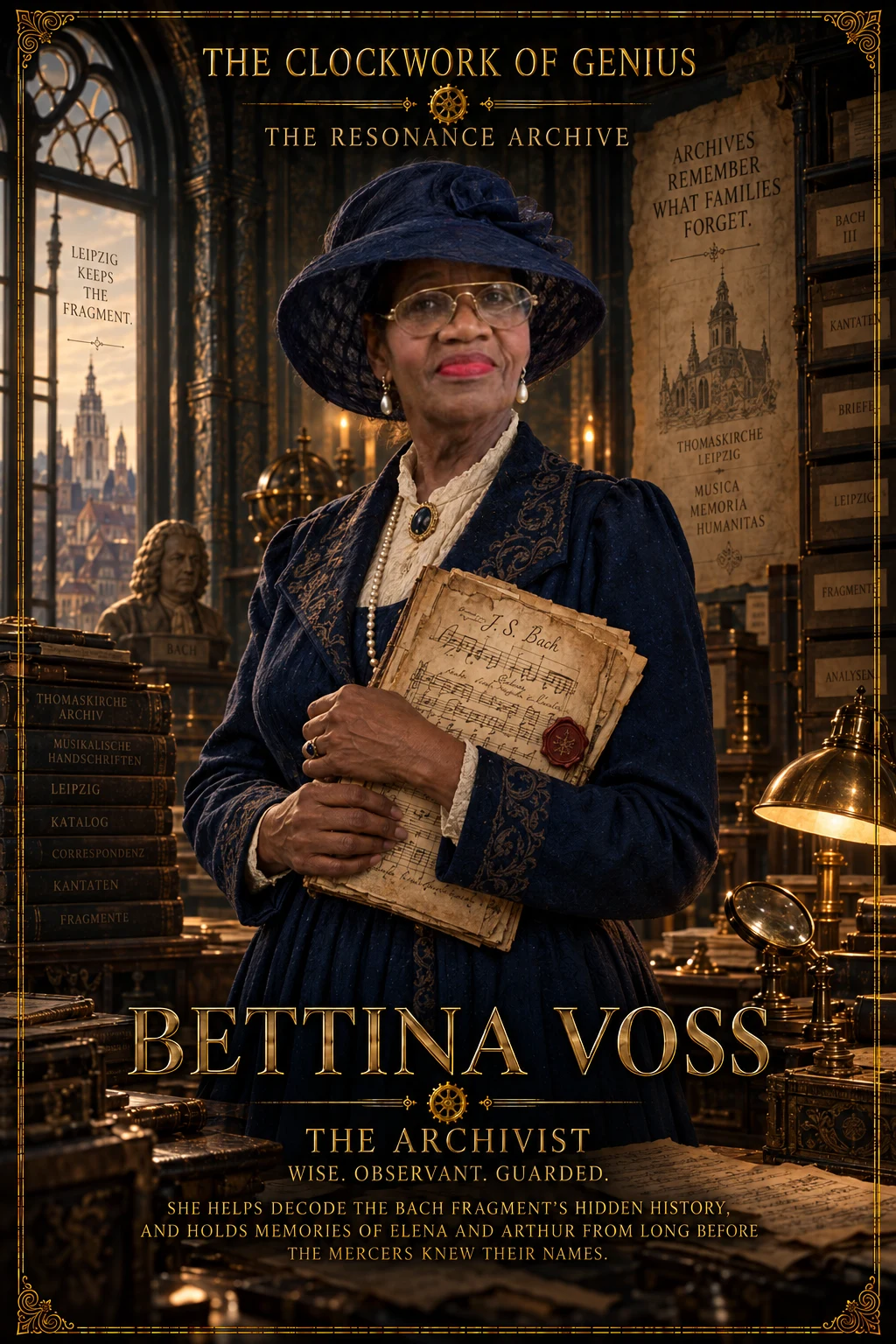
Bettina Voss: The Archivist Who Remembers
Bettina Voss is an elderly former archivist connected to Leipzig’s Thomaskirche, and one of those people who has spent so long around history that she refuses to treat it like something fragile behind glass.
Sharp-tongued, warm, practical, and refreshingly unsentimental, Bettina remembers Arthur and Elena from years earlier. Her stories offer Lucy and Roland glimpses of people they thought they understood, while her knowledge of Bach and the archives becomes crucial when the musical trail reaches Leipzig.
Bettina doesn’t romanticize the past. She remembers it. There’s a difference.

Klaus Reiner: The Man Marcus Sends When Questions Are Over
Klaus Reiner is what happens when Marcus Vale decides patience is no longer useful.
A cold, disciplined Vale enforcer, Klaus assumes responsibilities that once brought Adriana into direct conflict with the Mercers, but without Adriana’s doubts, hesitation, or growing conscience.
He isn’t interested in the history behind the Device or the philosophical arguments surrounding it. His purpose is much simpler: follow orders, find the target, finish the assignment.
For Lucy and Roland, Klaus represents a frightening change in the game. The people pursuing them are no longer merely trying to outthink them.